THE ENDLESSWALK
The journey of one Almajiri boy. A story of millions.
The journey of one Almajiri boy. A story of millions.
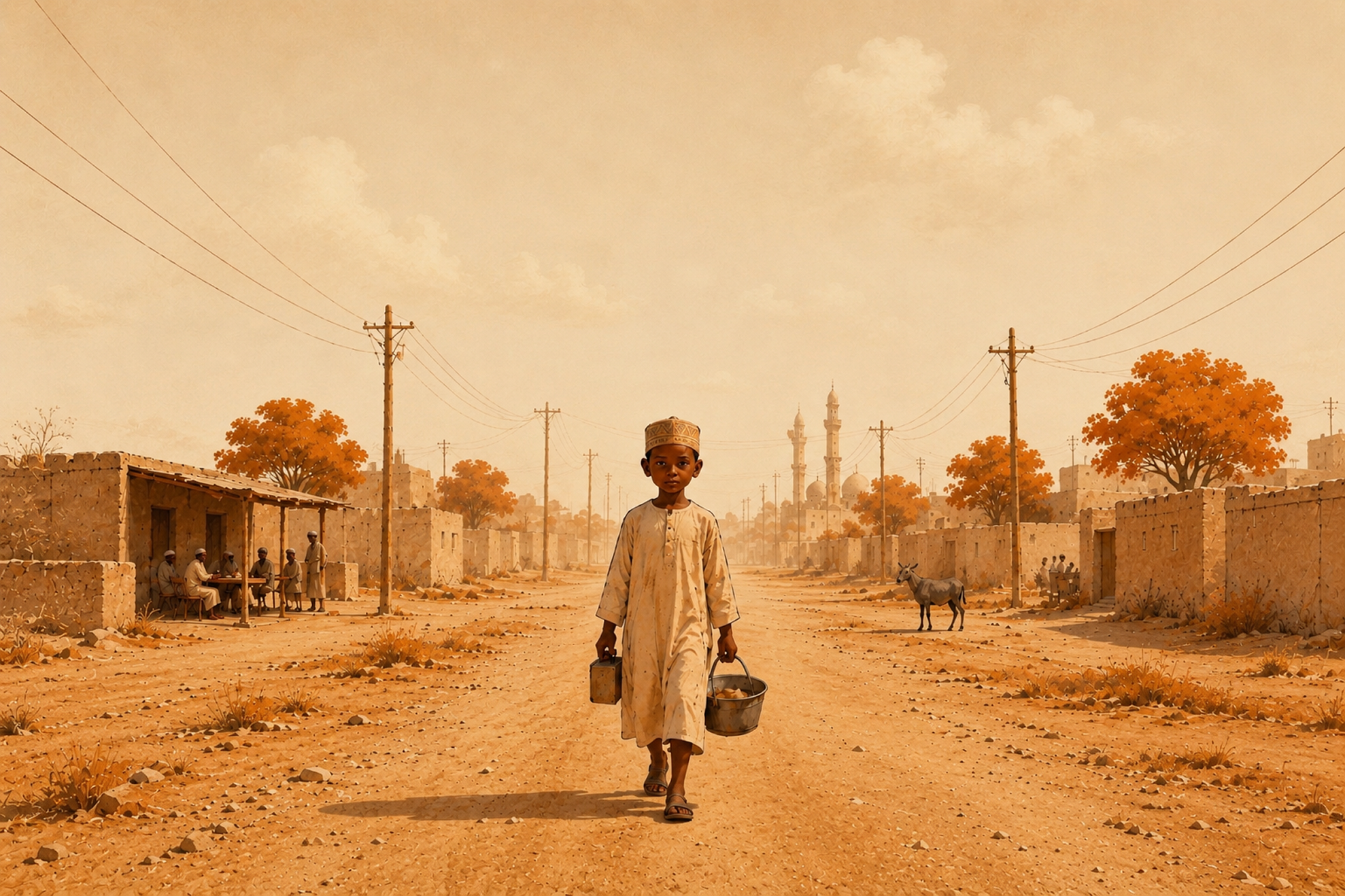
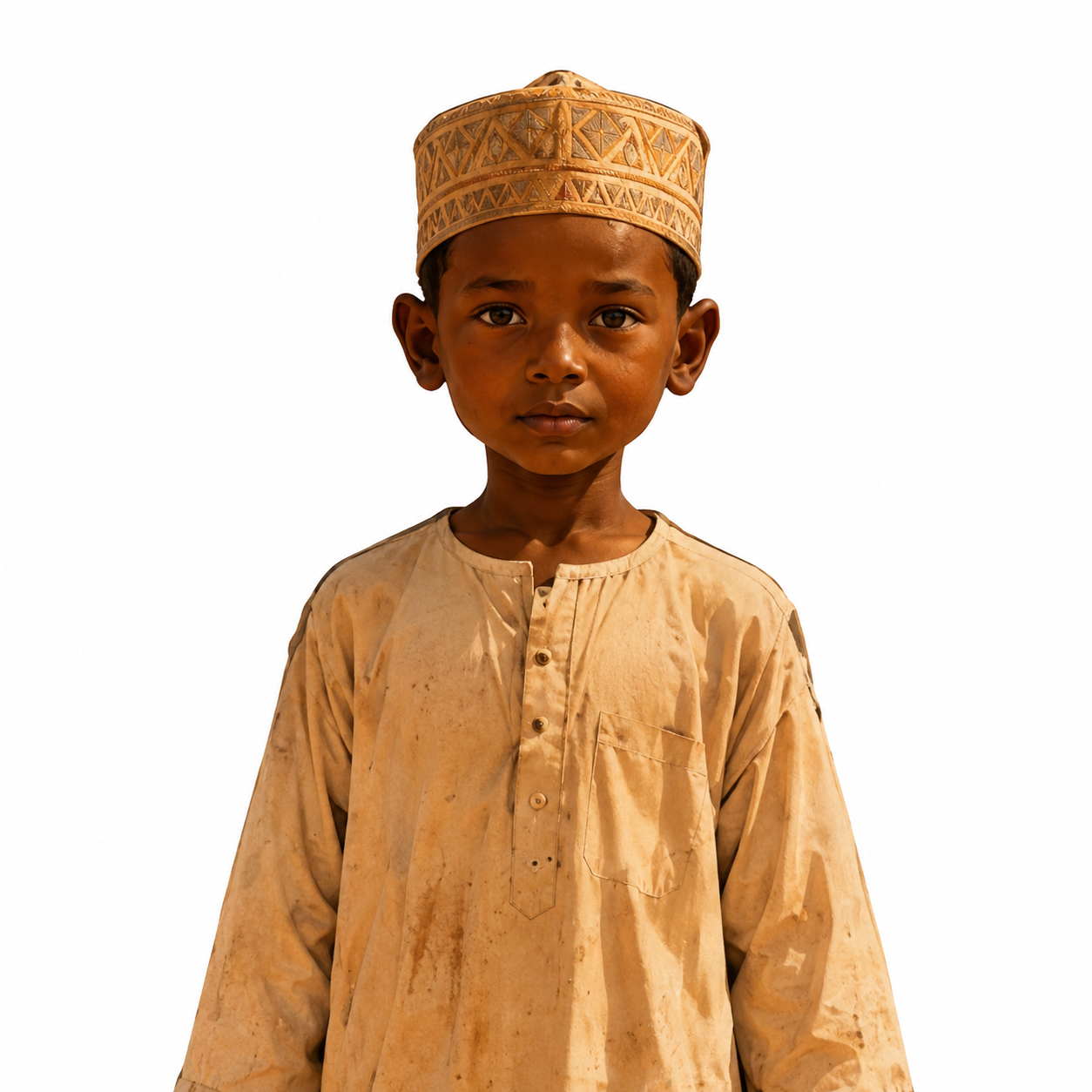
Sani follows the morning road with a bowl in one hand and a lesson waiting somewhere ahead.
The path teaches him where to stand, when to ask, and how quietly a child can disappear into routine.
His walk is fictional. The pattern behind it belongs to millions of real children.
Every Morning, Sani walks, not because he has to
but because knowledge calls him.
THE ALMAJIRI SYSTEM · NORTHERN NIGERIA
“Sani's day is not random. It is part of a system shaped by history, poverty, faith, migration and weak public support.”
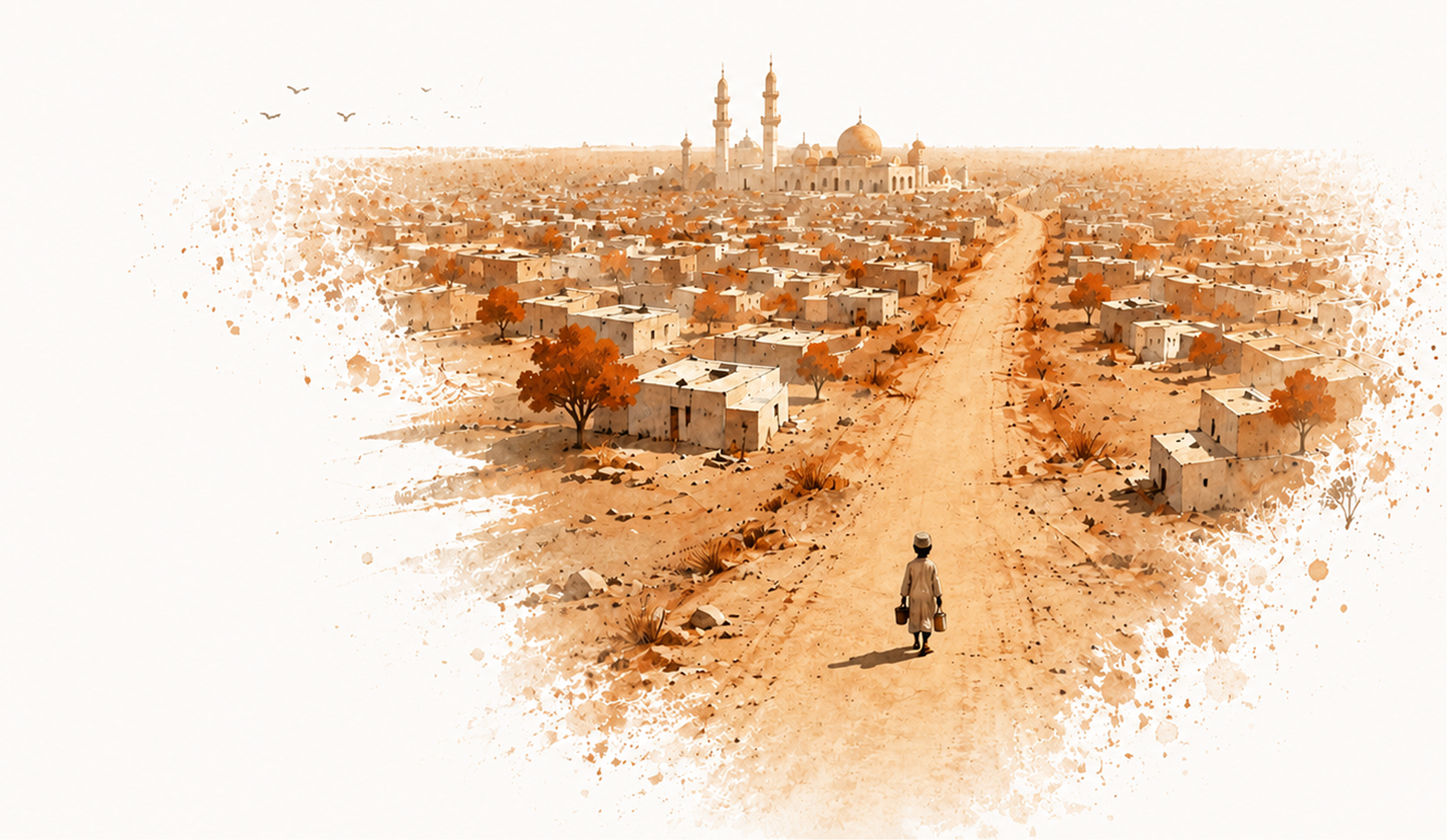
Many Almajiri children travel far from their families in search of religious education. The journey often begins with hope, but distance also separates children from the support they once knew.
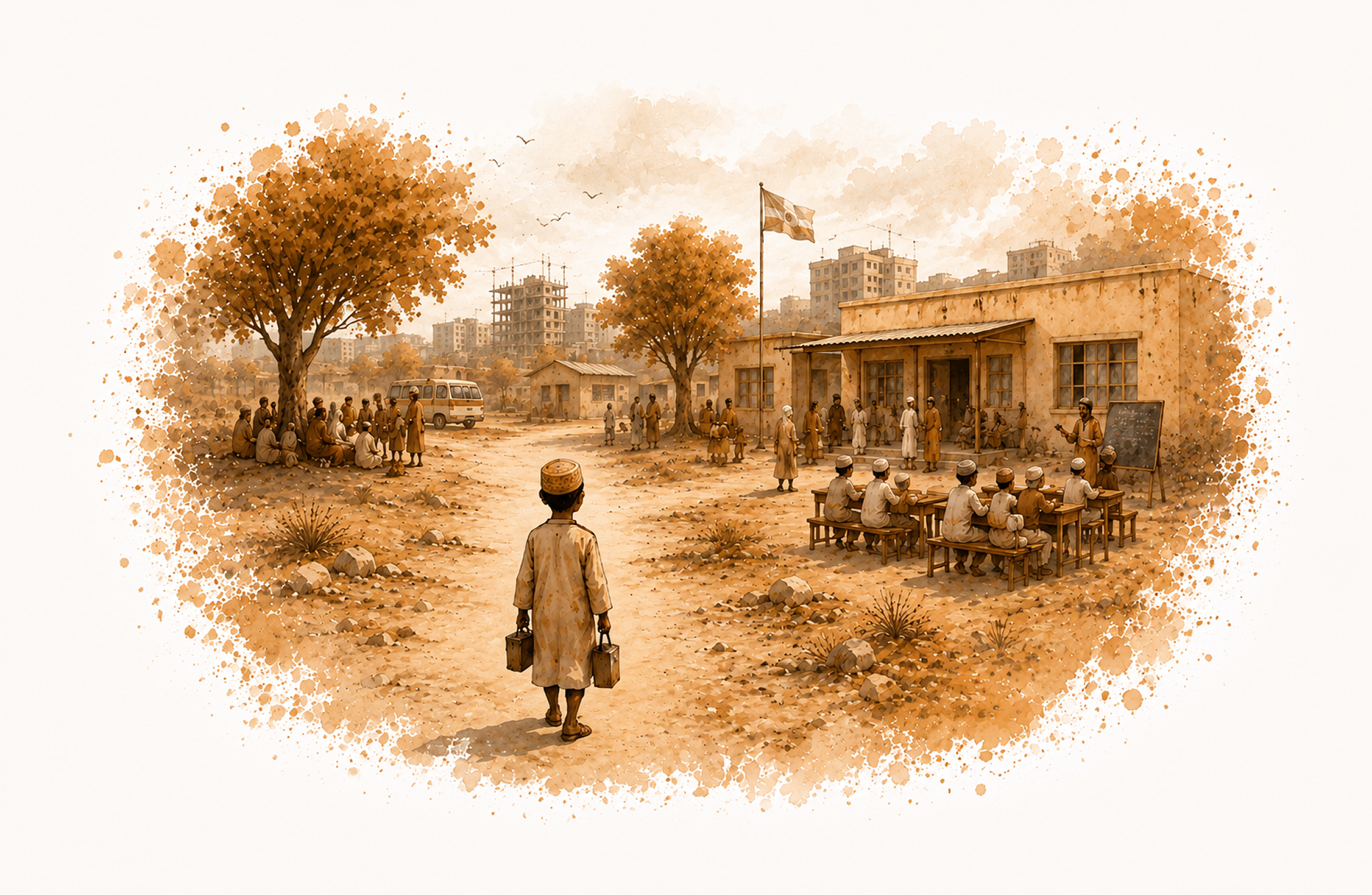
Education systems, community initiatives, and public policy influence how children experience learning. Where support is limited, vulnerability often increases.
For many families, difficult financial circumstances shape educational choices. Sending a child away may be seen as an opportunity to learn when resources at home are limited.
Behind every child is a family making difficult decisions. Their choices are often shaped by culture, opportunity, belief, and circumstance rather than a single reason.
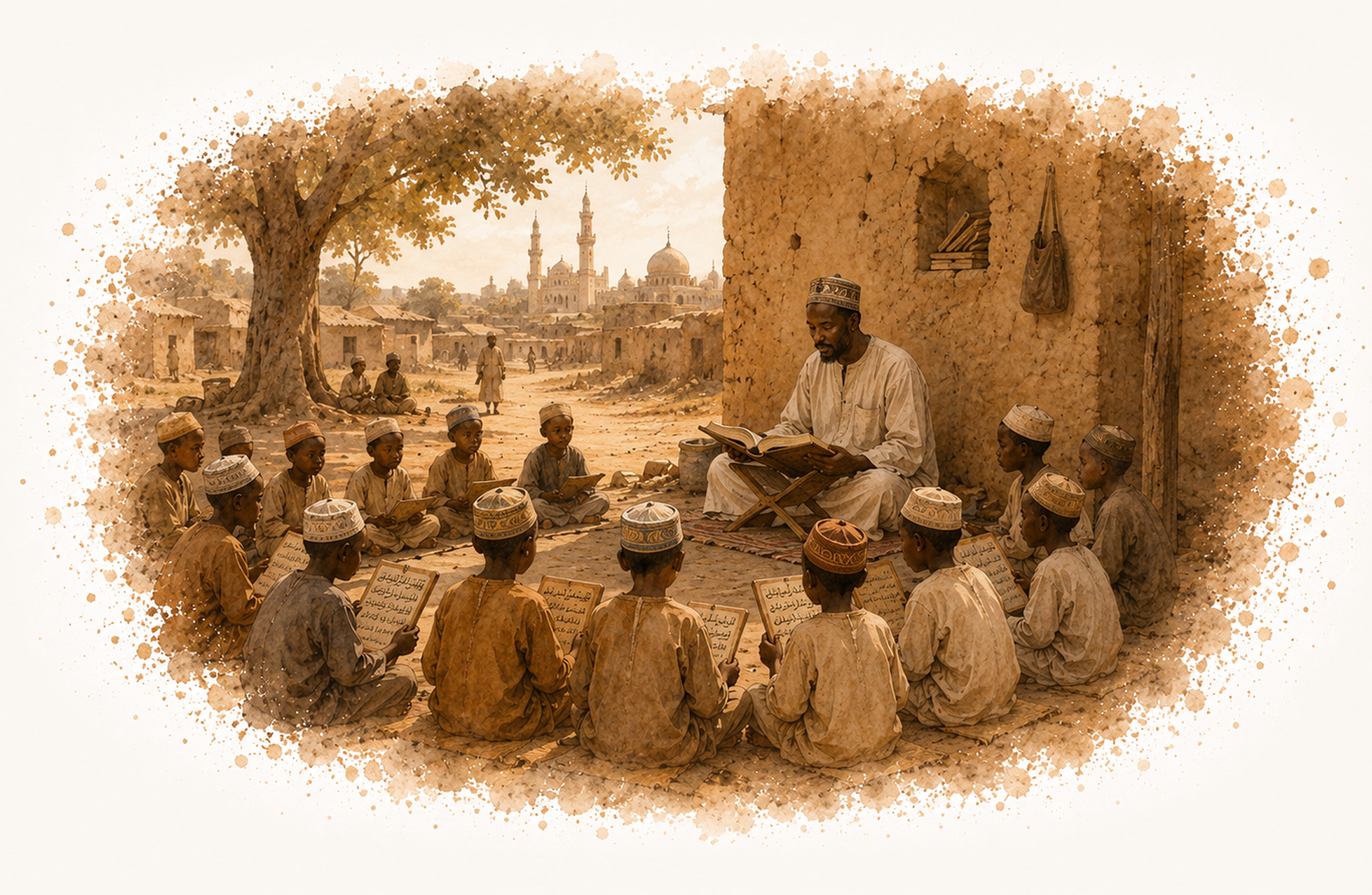
Qur'anic schools have existed for centuries, preserving religious knowledge and shaping generations of students. Understanding this tradition is essential to understanding the Almajiri system itself.
Many Almajiri children travel far from their families in search of religious education. The journey often begins with hope, but distance also separates children from the support they once knew.
Education systems, community initiatives, and public policy influence how children experience learning. Where support is limited, vulnerability often increases.
For many families, difficult financial circumstances shape educational choices. Sending a child away may be seen as an opportunity to learn when resources at home are limited.
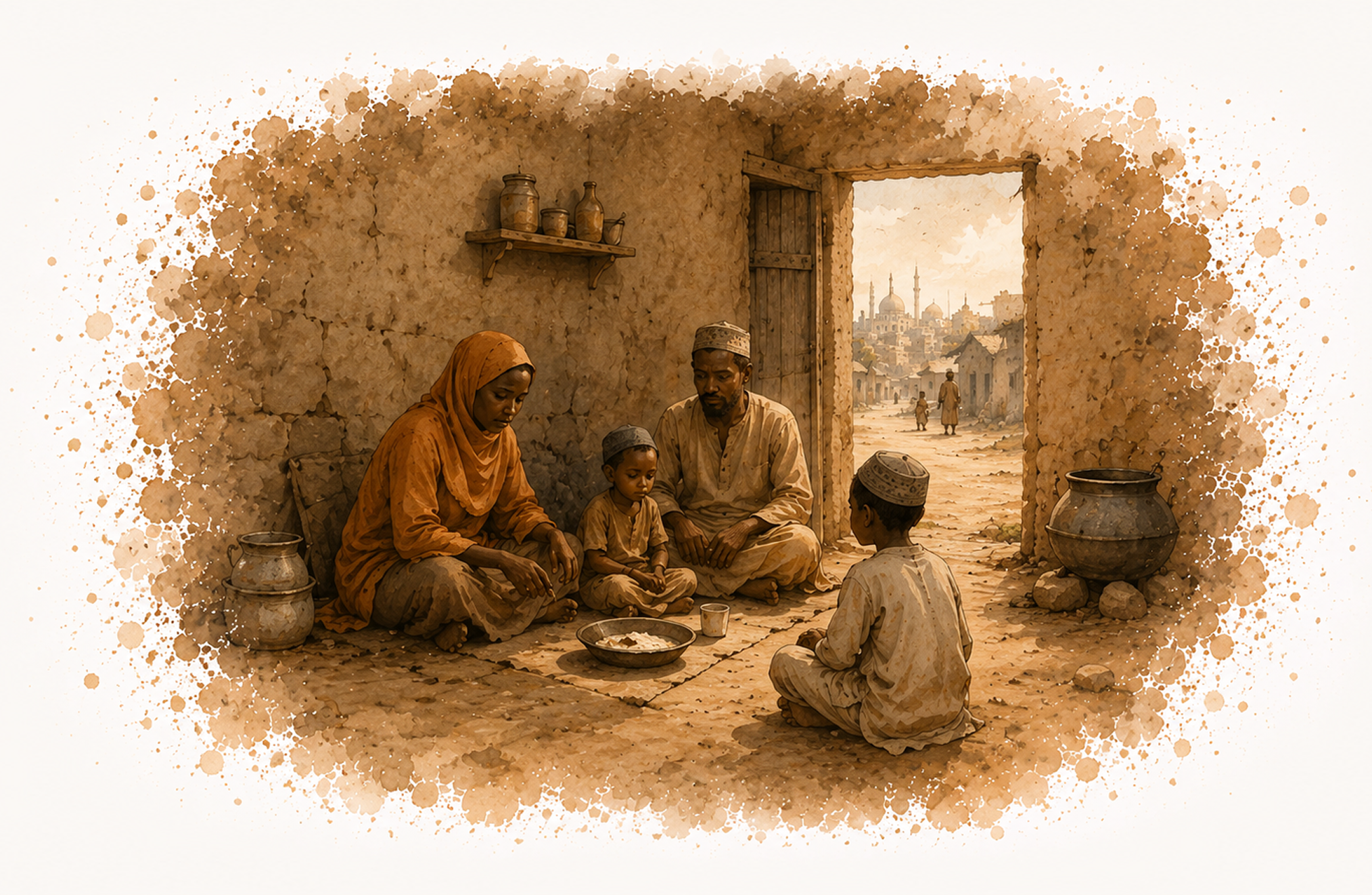
Behind every child is a family making difficult decisions. Their choices are often shaped by culture, opportunity, belief, and circumstance rather than a single reason.
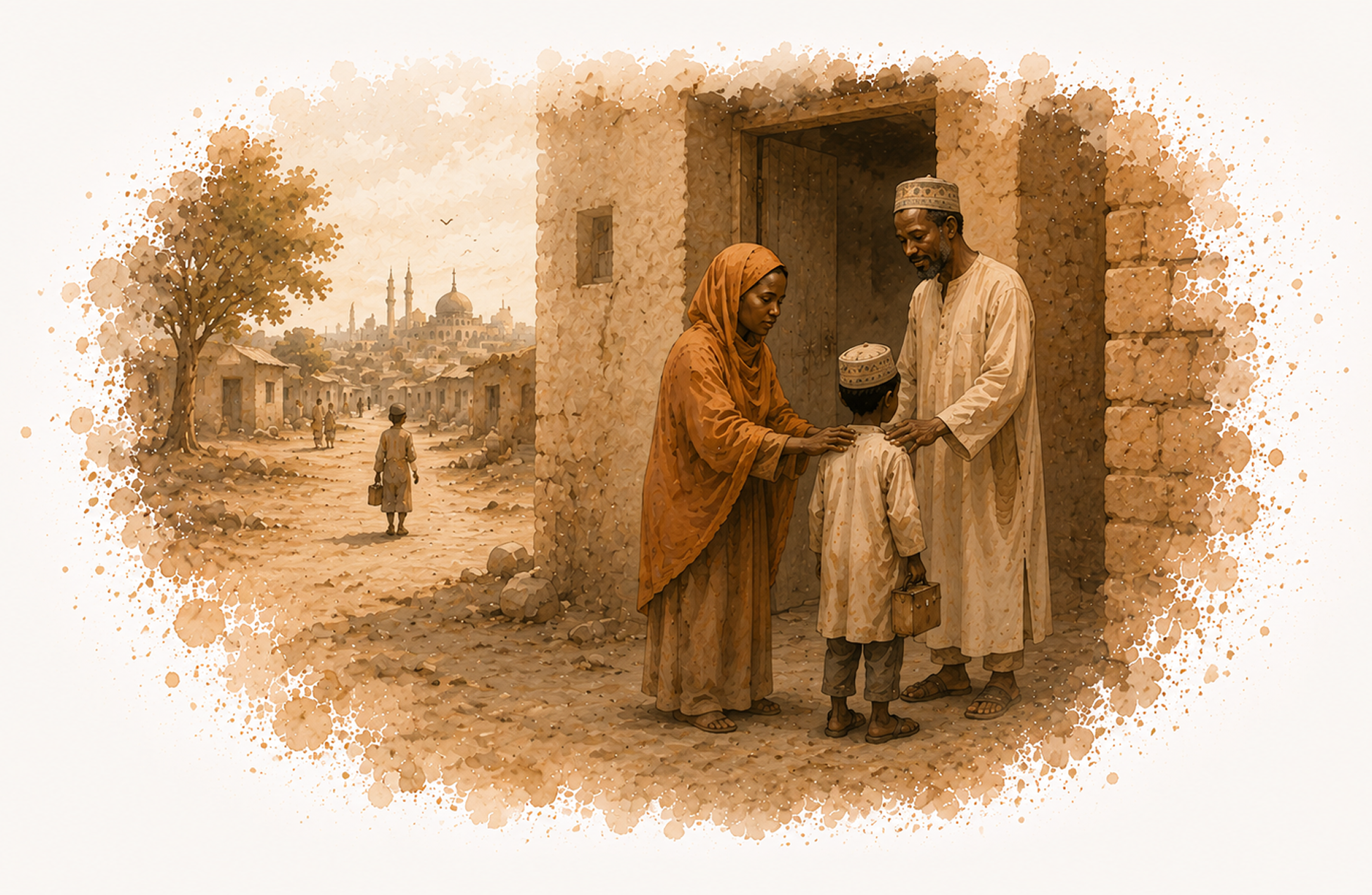
Qur'anic schools have existed for centuries, preserving religious knowledge and shaping generations of students. Understanding this tradition is essential to understanding the Almajiri system itself.
SCROLL
AREWA 1800
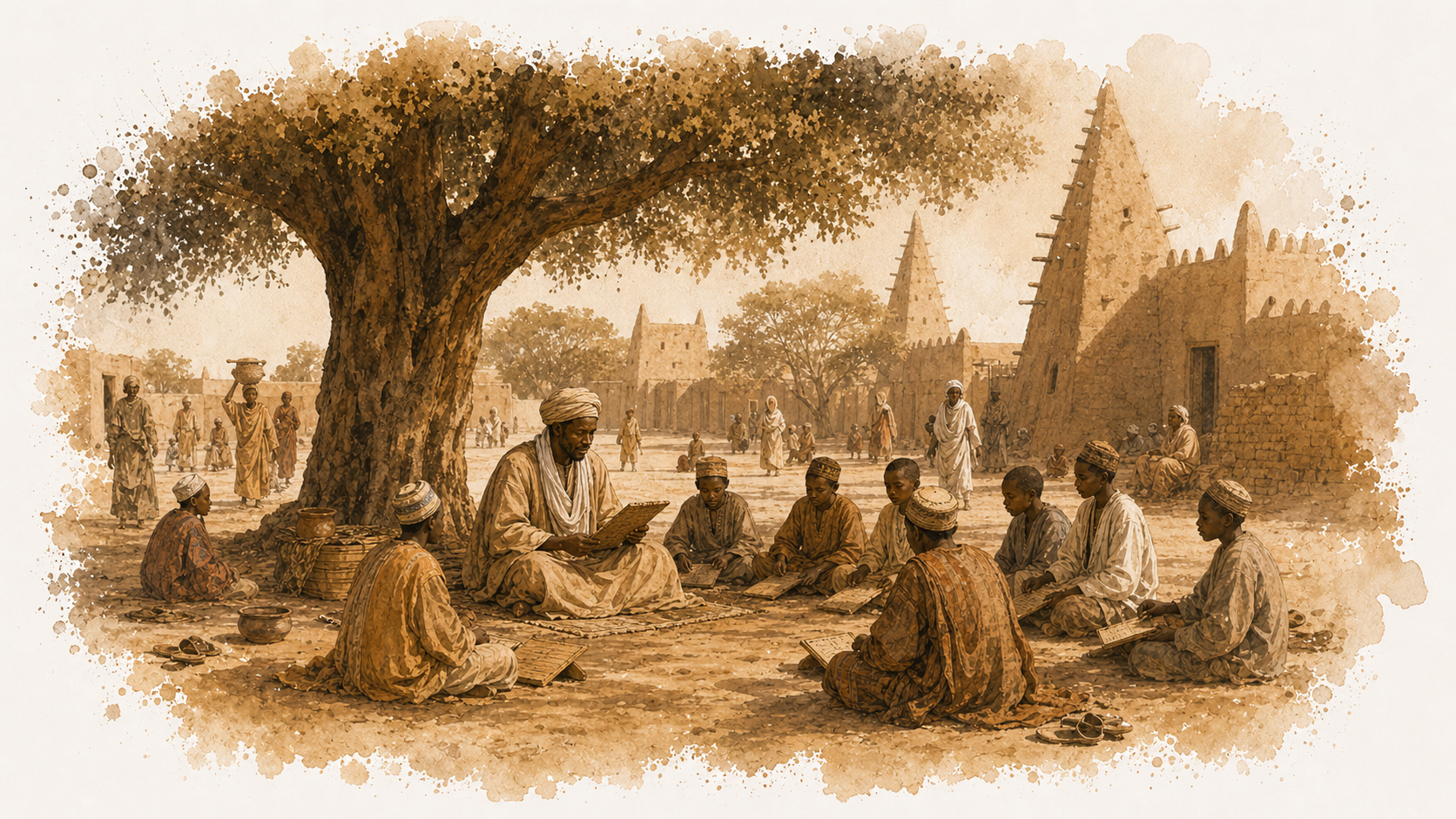
Qur’anic learning lived within the community—sustained by shared care, work, faith, and belonging.
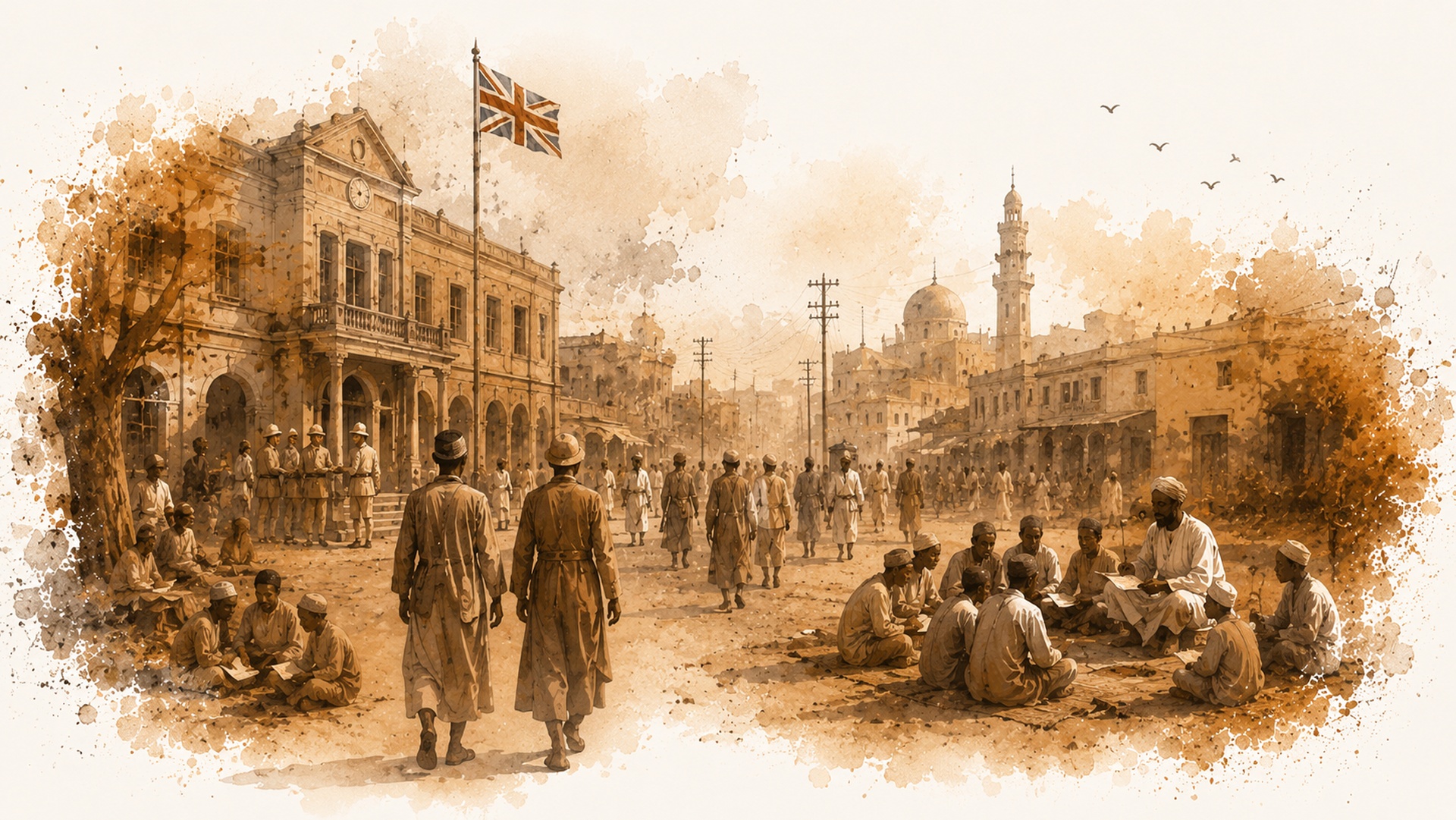
Colonial rule disrupted local systems of support, separating learning from many of the communities that sustained it.
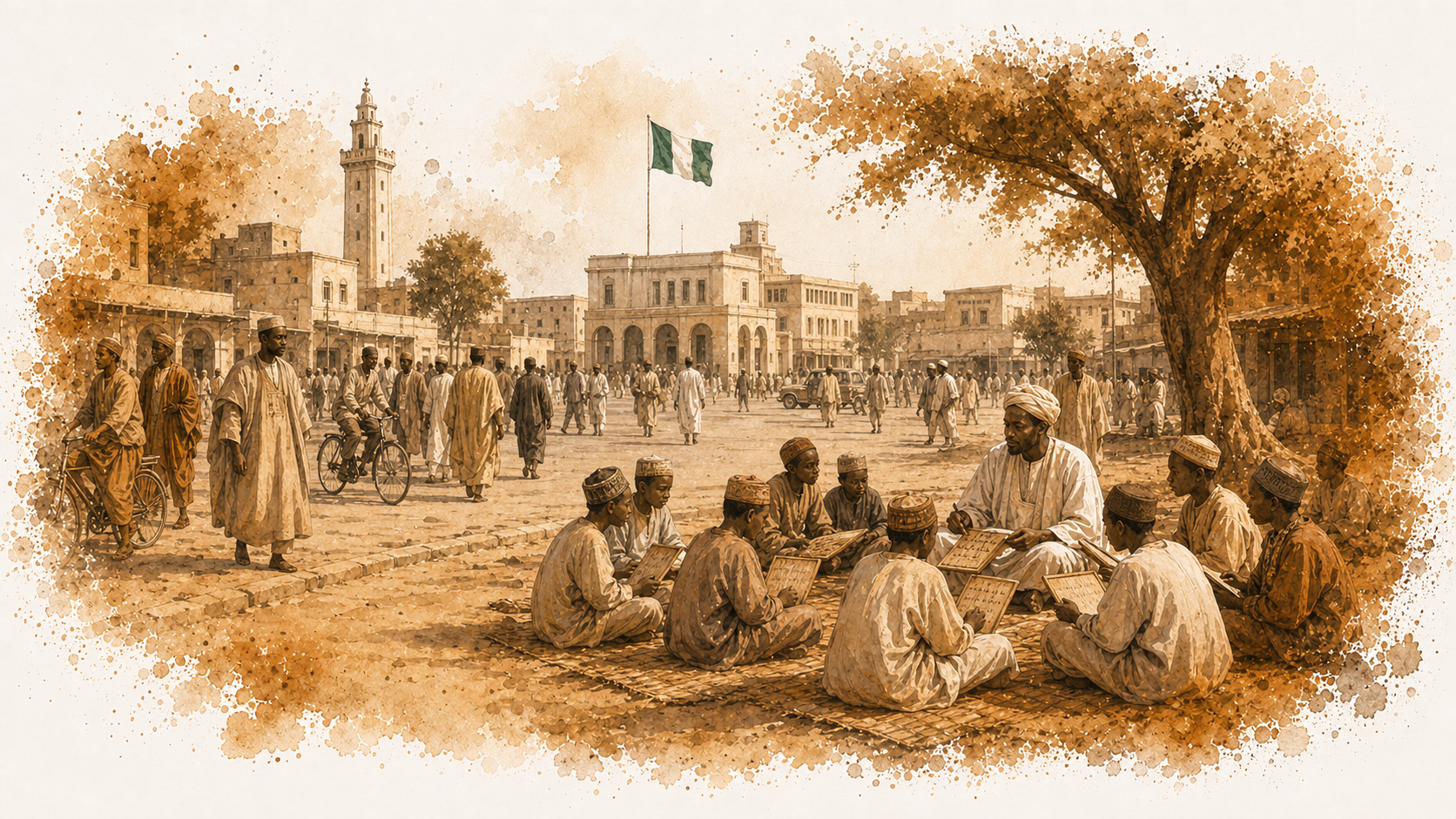
Independence inherited divided systems, leaving traditional learning without a clear place in national education policy.
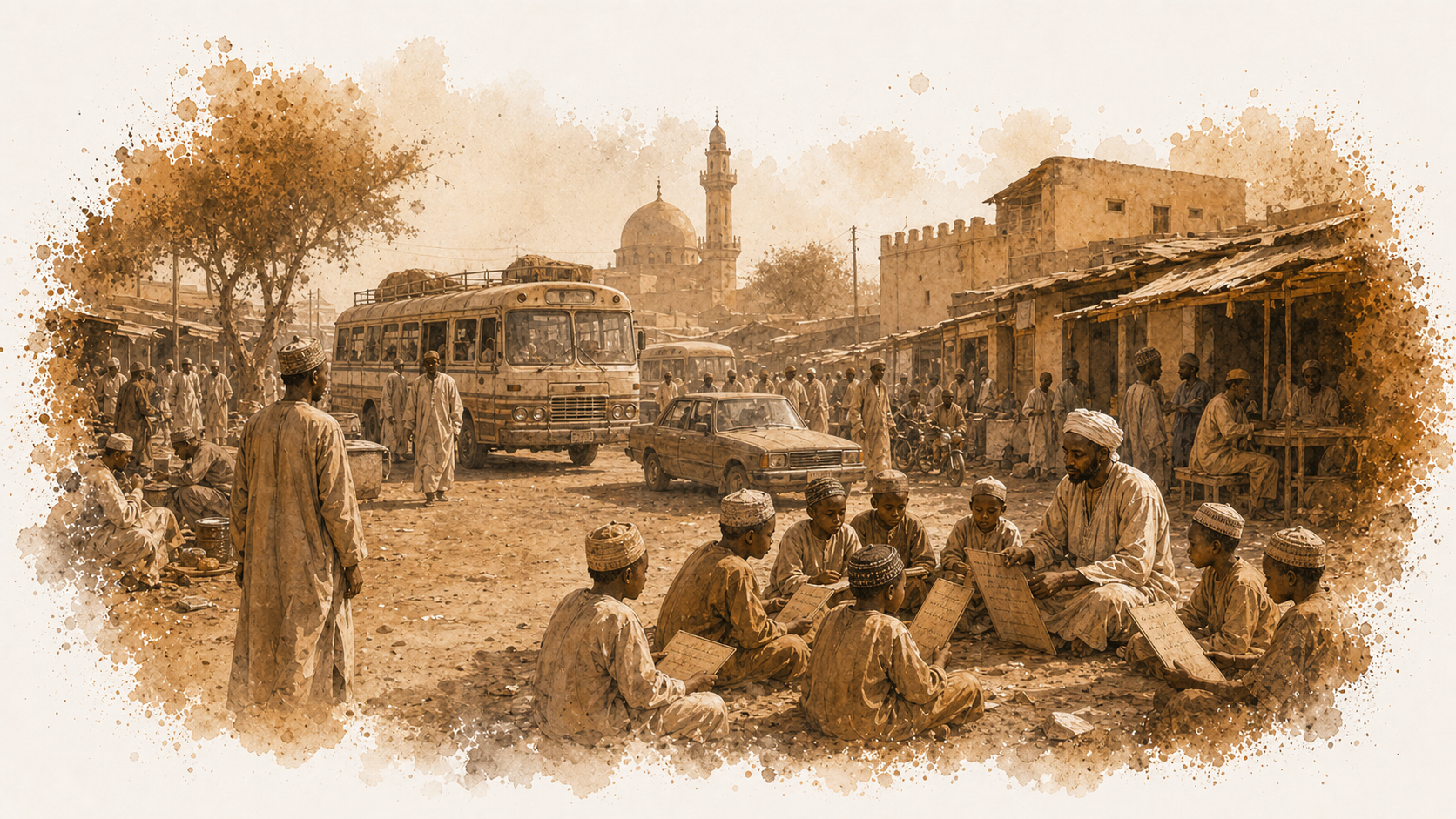
Economic pressure weakened families and public support, pushing more children to balance learning with daily survival.
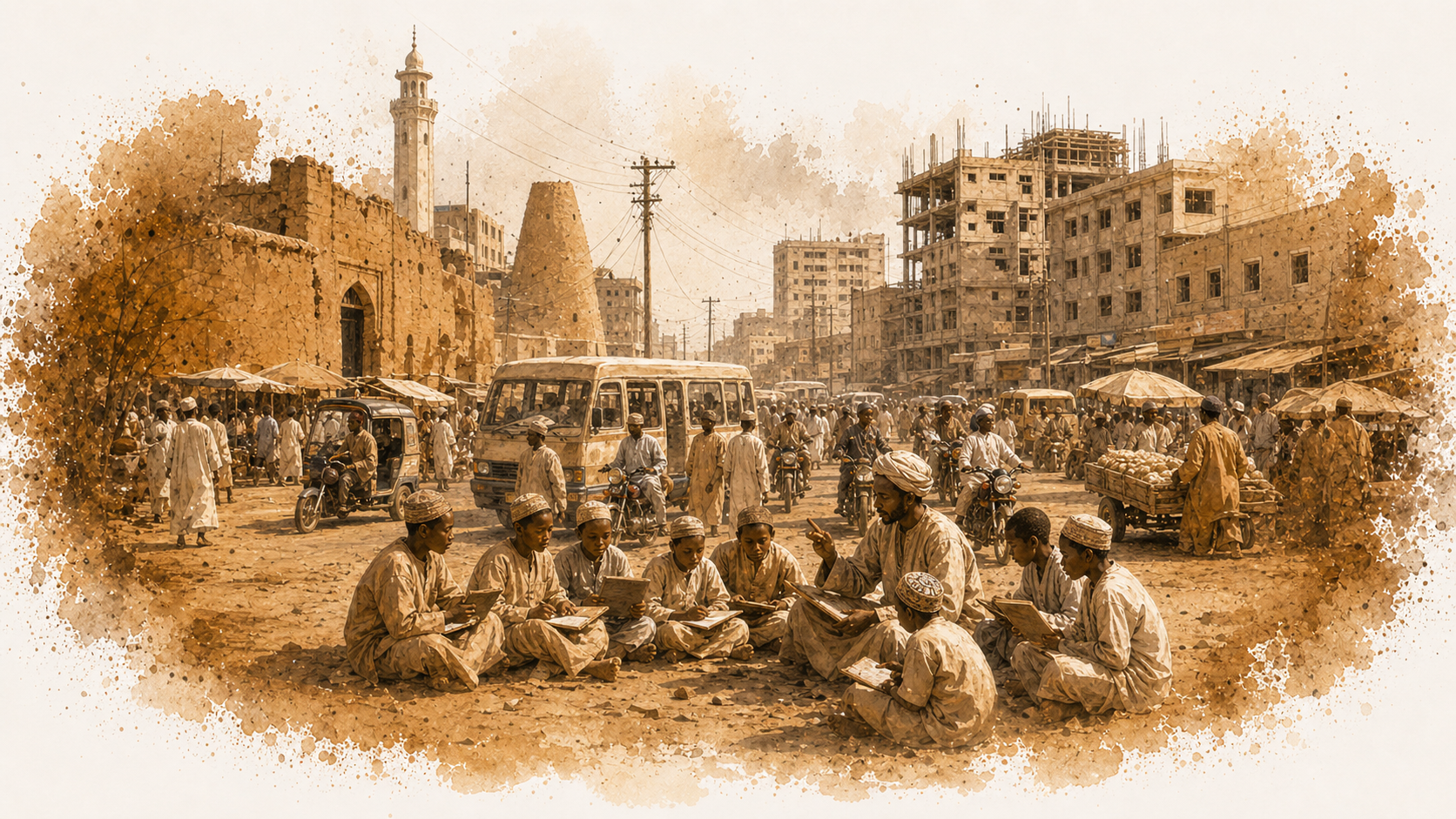
Rapid urban growth carried the tradition into crowded cities, where poverty, distance, and exclusion became more visible.
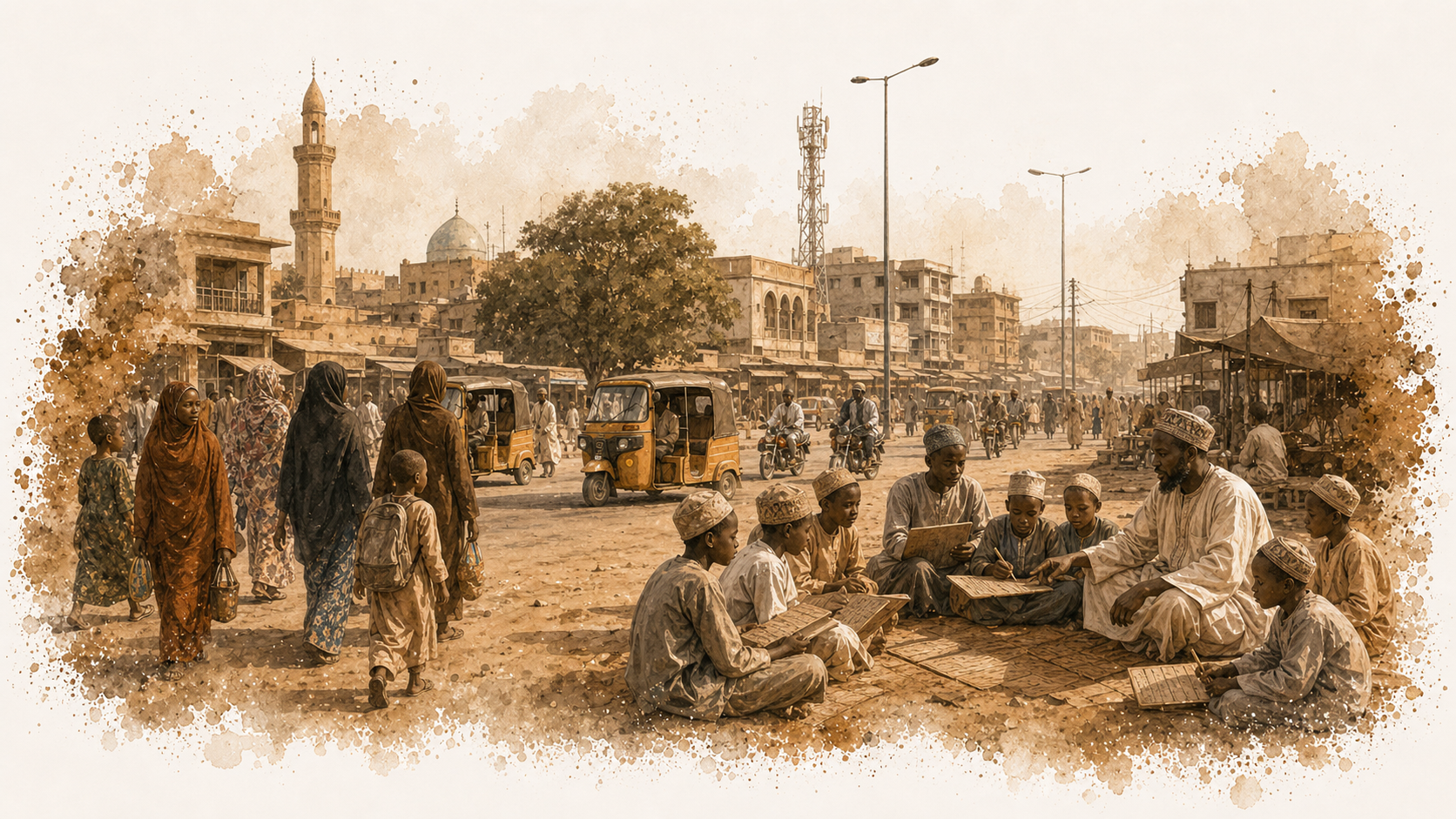
A resilient tradition now meets new pressures—and a chance to build learning that can move with every child.
North West
Kano · Katsina · SokotoRounded regional estimates · OOSC data: UNICEF 2023
What persists
For many children, learning is interrupted not by a lack of curiosity, but by the distance between daily survival and a dependable classroom.
ALMAJIRI SOLUTIONS
A path should lead somewhere: toward safety, belonging, and the freedom to imagine a life beyond survival.
A DIFFERENT FUTURE
What changes when learning meets him where he is—when possibility becomes part of the road he already walks?
INTRODUCING HANTSI
Not a product arriving from outside the story, but a learning path shaped by it: gentle, accessible, and made to grow with every child.
For Almajiri children, Hantsi turns interrupted learning
into a path that can continue—wherever life begins.
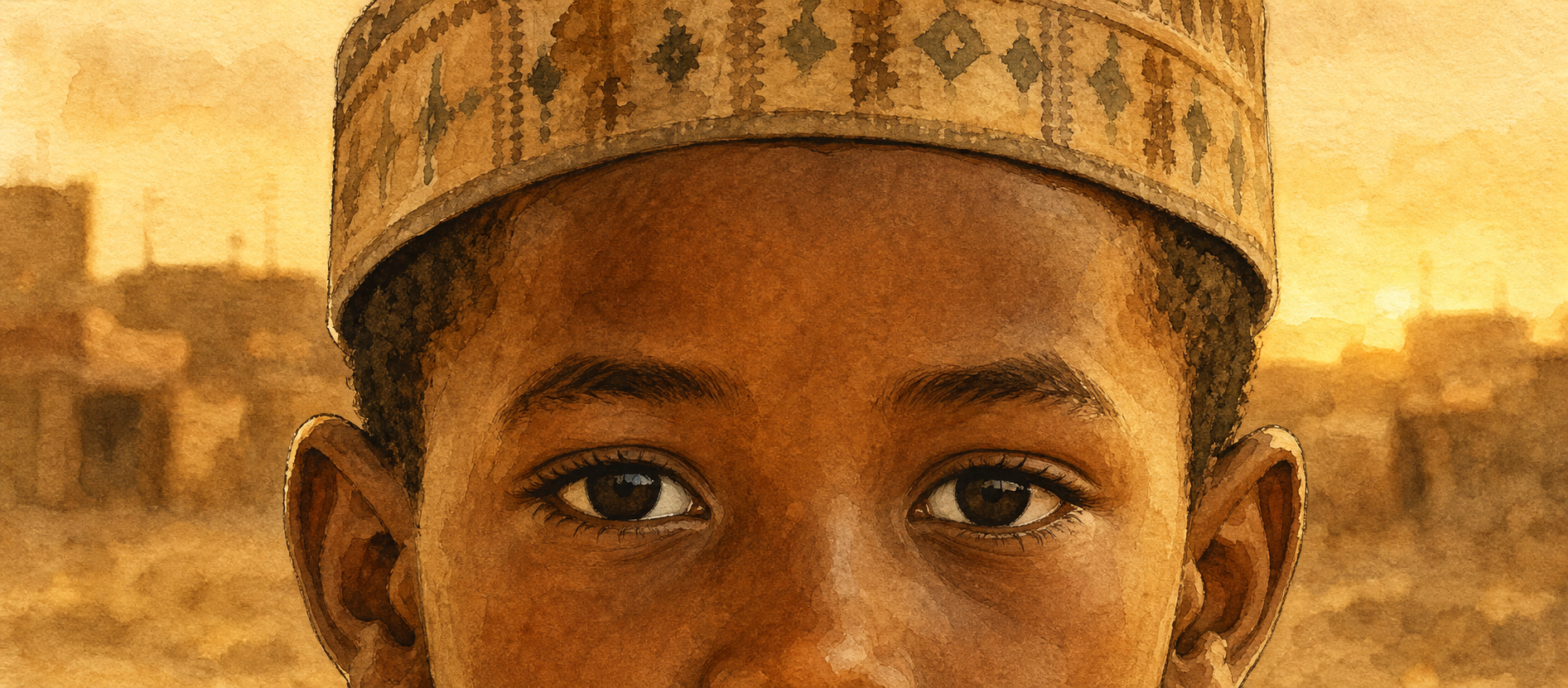
The challenges are real, but together we
can build solutions that last.
Alone we can do so little;
— Helen Keller
together we can do so much.